

From Service-Line Visibility to Case-Type Economics: Why Hospitals Need a Shared Operating Picture

Hospital

Hospitals do not lack data.

Most health systems are swimming in it, and it may be fragmented across multiple data sources

The harder problem is creating a trusted operating picture that finance, operations, supply chain, clinicians, revenue cycle, and supplier partners can actually use to make better decisions together.

That distinction matters.

A dashboard is not the same thing as visibility.

And visibility is not the same thing as operational alignment.

Most hospitals already have some level of service-line economics visibility:

  • Orthopedics.
  • Cardiovascular.
  • Oncology.
  • Spine.
  • Women’s health.
  • General medicine.

That is Level 1 visibility.

Useful.

Necessary.

But often too broad to fully explain where operational pressure is actually being created.

One challenge with service-line reporting is that economics can get “peanut butter spread” across a broad mix of case types.

At the top level, the service line may appear directionally healthy.

Underneath that average, the operational reality may be much more uneven.

Some case types may be supporting the economics.

Others may be disproportionately underwater because reimbursement, ICU burden, implant spend, drug cost, LOS pressure, denial exposure, or complexity are not lining up.

That is not a finance problem.

Or a clinical problem.

Or a supply chain problem.

It is an operating reality.

In some ways, this feels similar to the evolution from broad overhead allocation toward more activity-based costing logic in other industries.

The average still matters.

But eventually leaders need to understand what is happening underneath the average. The P10 and P25 tails may matter even more.

Healthcare is no different.

Hospitals are not product companies, and this is not about labeling “good” or “bad” patients or payors.

Hospitals exist to care for patients and communities, including economically difficult populations.

But operational sustainability still matters.

The challenge is understanding where complexity is accumulating, where economics are drifting, and where broad averages may be concealing actionable operational differences.

That is where Level 2 visibility becomes important.

The view underneath the service line.

Case-type economics.

Diagnosis Related Group (DRG) level patterns:

  • Net Revenue
  • Contribution margin behavior.
  • ICU and LOS bands.
  • Cost buckets.
  • Denial exposure.
  • Supply, implant, pharmacy, lab, and imaging intensity.

Not to create perfect precision.

To create a better shared fact base.

That is difficult because the operational truth is fragmented.

Pieces of the answer sit across EMR workflows, reimbursement systems, cost accounting, contracts, item master activity, supplier activity, acuity data, denials, and operational workflows.

Then add physician variation, substitutions, payer mix, outliers, and local operating realities.

The signal gets noisy fast.

And even when the signal is directionally right, visibility alone does not create change.

Clinical alignment matters.

Operational workflow matters.

Finance matters.

Supply chain discipline matters.

Supplier collaboration matters.

Executive sponsorship matters.

This is a team sport.

The hospitals that eventually solve this problem may not simply have better reporting.

They may have something more valuable:

A shared operating picture that helps the organization understand where operational pressure, complexity, and margin erosion are actually occurring underneath broad service-line averages.

In a margin environment this tight, that kind of visibility may eventually become less of an analytics exercise and more of an operating discipline.
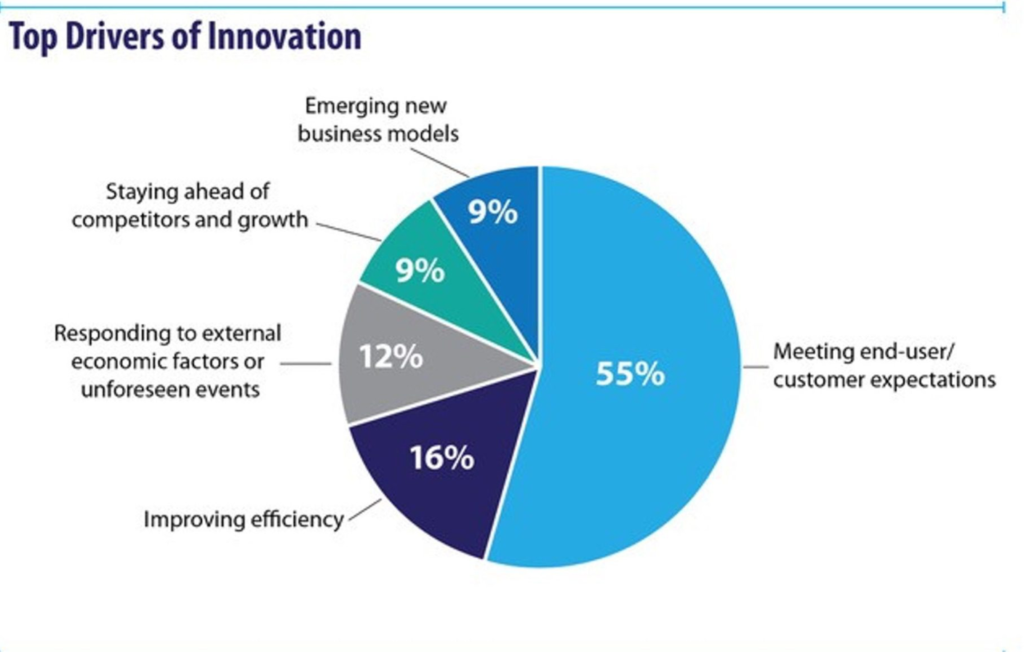
The Innovator’s Dilemma | Sailing Faster in Red Oceans?

Source: https://chiefexecutive.net/new-poll-ceos-find-challenges-in-using-customer-data-to-drive-innovation/

Implementing lessons from The Innovator’s Dilemma (Clayton Christensen, 1997) and Blue Ocean Strategy (W Chan Kim and Renee Mauborgne, 2004) is still a challenge for many companies today. Despite its groundbreaking insights into disruptive innovation, only 9% of corporate innovation is directed towards truly disruptive technologies as illustrated by this graph. Instead, most innovation efforts – 91% – are focused on incremental improvements to existing products and services, essentially “sailing faster in red oceans.” But is this conventional approach the best solution to the innovator’s dilemma?

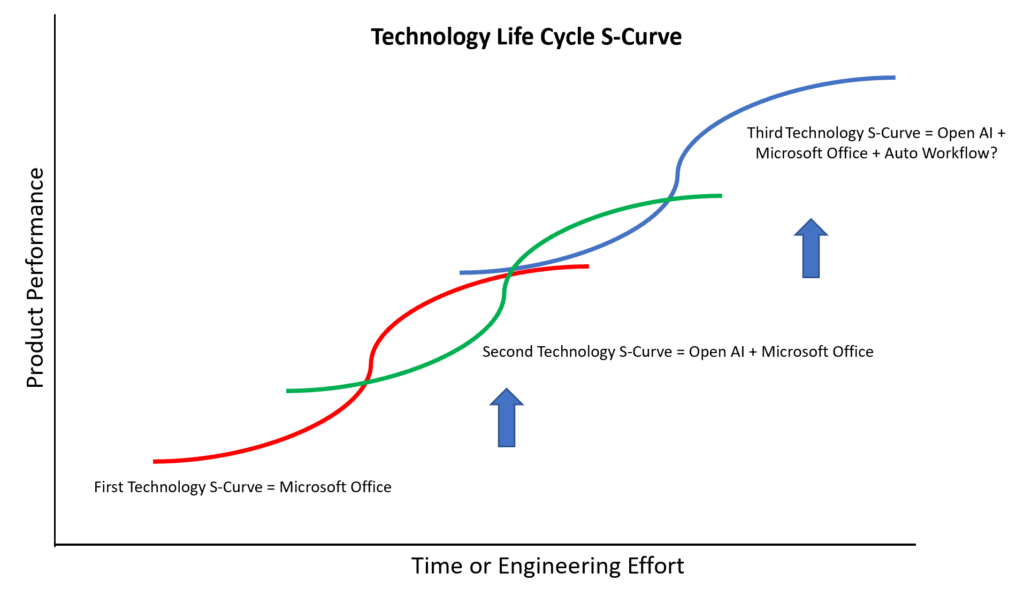
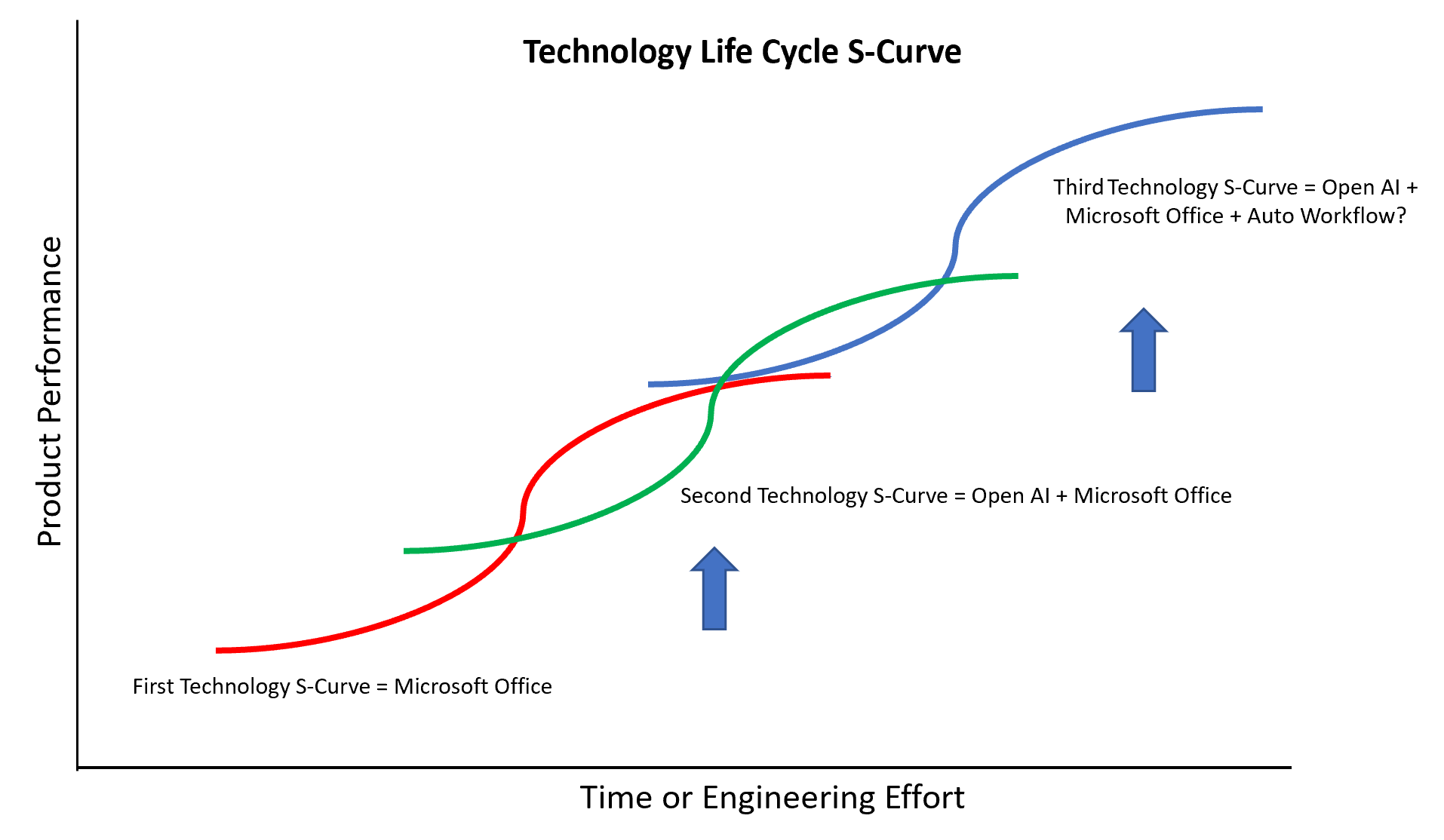
The siren call of steady, incremental progress can be tempting, but it fails to address an underlying root cause of the innovator’s dilemma: the difficulty of balancing short-term performance with long-term success. In the quest for delivering an exceptional customer experience and building closer customer relationships, companies often become fixated on meeting current wants and needs. But by solely focusing on these incremental improvements, they run the risk of stifling true innovation and limiting themselves to moving on the same product or market S-Curve (product/technology life cycle curve). Worse still, they may push disruptive technologies onto customers who simply don’t understand or need them.

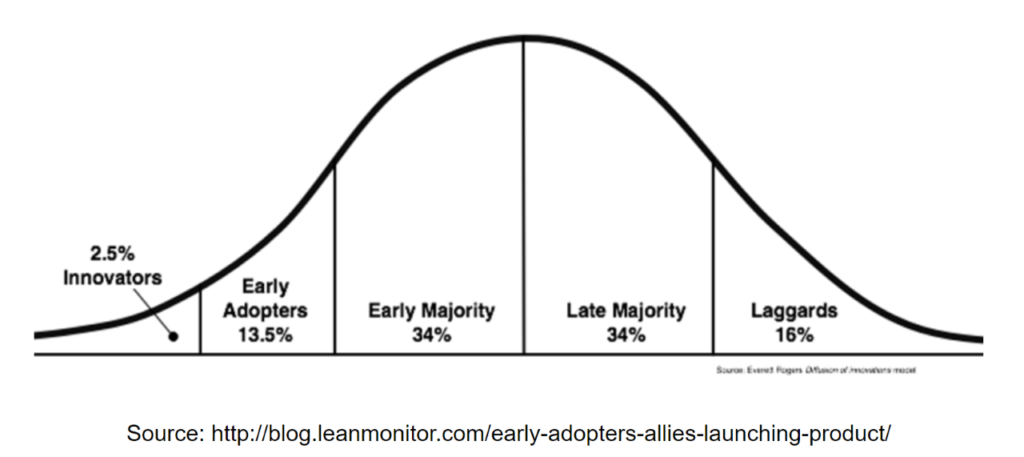
As a result, many companies find themselves waiting for product and service markets to cross the chasm into the more profitable majority markets before taking the leap into disruptive technologies and markets. This passive approach, however, is a missed opportunity.

Rogers, E. (1962) Diffusion of innovations

The companies that are leading the way in innovation are those that have embraced the lessons of The Innovator’s Dilemma and are sailing boldly into the uncharted and lonely waters of blue oceans. Transforming product offerings and disrupting business models to create entirely new and differentiated offerings that satisfy unmet needs and solve real problems, not only builds better customer relationships but also gains a competitive advantage in the market along with the potential for supercharged profits.

The Potential Effect of Microsoft & Open AI Chat GPT

Source: Connected Tech SCM

Microsoft offers a compelling example. With an initial investment of $1B in Open AI, followed recently by a larger investment of $10B, Microsoft created an option to integrate AI into its products/applications. Microsoft is not just incrementally improving its offerings on the existing product S-Curve. Instead, it’s jumping to a new product S-Curve by applying disruptive technology to some of the most popular and effective software solutions on the market. The AI-enhanced applications could offer opportunities for improved productivity and ease of use for its customers and simultaneously position Microsoft as a leader in the AI space – in a seemingly accelerated response, Google is internally testing one of its AI solutions, Apprentice Bard.

The question is, leading into a recession, can you follow Microsoft’s path of investing boldly in disruptive experiments as calibrated bets at the potential expense of short-term performance? The exclusive payoff is finding the long-term success afforded by shifting up to new product S-Curves and blue oceans for your product or services! #createvaluethatmatters

Jim Collins on “Thriving in Chaos”

Sharing an interview with Jim Collins (author of Good to Great) and his insights on managing in uncertain times.

When facing uncertainty, a less obvious and uncomfortable approach for creating differential value is…

“in an uncertain world, there’s this very weird paradox of, on the one hand, placing really big bets, and, on the other, protecting your flanks against downside events, and putting both of those together.” 

If you’re going to make the big bet of going to the South Pole in 1911, use dogs and sleds (a proven strategy for the frozen terrain) like Roald Amundsen did to make the round trip safely.

How do you place big bets at challenging moments when you may be most inclined to scale back conservatively?

Which insight, if implemented, would have the most impact on your status quo? 

With so much attention already focused on risk mitigation, what are the big, calibrated bets that you should be making now to set up future success – business and personal?

#CreateValueThatMatters

Insane Progression Towards Your Why

Source: Pixabay

I have a confession…

I enjoy watching the Winter Olympics

And I love watching Halfpipe.

Amazing athletes compete on the edge of “what is” possible.

And, I admire how they still push for what’s referred to as “PROGRESSION.”

Being the first to innovate, compete, or complete a new, more insane trick.

For them, it’s all about continuing to go bigger, harder and adding more.

No one is satisfied with or confined by their status quo

or the boundaries of “what is” possible today.

The Halfpipers provide us with an inspirational example of the power of PROGRESSION!

Should we all be a bit more like Shaun White and Chloe Kim

by pushing for PROGRESSION in our lives?

What does PROGRESSION look like for you?

How do you take a step further on the things that matter most to you?

Even if you don’t ever complete your equivalent of the Triple Cork, you’ll be better off for trying.

#CreateValueThatMatters

How to confidently negotiate great deals!

Negotiation is a colorful mosaic of various negotiation skills and activities needed to close deals
#success #b2b #sales
Because negotiation Matters!

Excited to announce the launch of Negotiation Strategy Insights LLC’s on-demand eLearning course…

“How to confidently negotiate great deals”

Designed to help you become more effective, comfortable, and confident when negotiating to close more deals, better deals, and build stronger relationships.
 
Incorporates our step-by-step process, best practices, and lessons learned forged and stress-tested by hundreds of complex B2B deals negotiated over 25 years of Automotive OEM Purchasing experience that delivered more than $1B of negotiated savings.

Why? Studies tell you (3) surprising things about negotiation!

1. More than 50% of people aren’t comfortable, and 40% aren’t confident when negotiating

2. More than 50% of business opportunities result in “no decision”

3. Deals can lose up to ~40% of their value over time

Do you connect with any of these pain points?

To learn more about Negotiation Strategy Insights LLC’s innovative course, click the link below:

https://negotiationstrategyinsights.thinkific.com/courses/negotiation

ALIEN Thinking Creates Disruptive Innovation & Amazing Results

https://chiefexecutive.net/100-years-ago-alexander-fleming-revealed-the-key-to-breakthrough-ideas/

If you want to innovate and make discoveries like penicillin, is out of the box thinking enough, or should you use next level ALIEN Thinking?

What is ALIEN Thinking?

Attention: Knowing how to actively look for the problems/things worth solving and improving

Levitation: Moving from understanding observations to gaining insights

Imagination: Connecting unrelated “dots” from different areas to envision what doesn’t exist.

Experimentation: Testing how to take an idea to a workable solution (use iteration)

Navigation: Steering past obstacles to find a way for your solution to move forward

What are Lessons Learned about innovation from the discovery of penicillin?

  1. Be curious and apply fresh eyes throughout the ALIEN Thinking process
  2. Touch all the bases/aspects of ALIEN Thinking
  3. Build teams with members excel at an aspect of ALIEN Thinking

Result of Relative Social Media Value? | Signal App’s Meteoric Rise

A chart showing Signal App's Crazy Meteoric Rise in app downloads relative to its competitors for Jan 2021 is an example of  Relative Social Media Value
Signal App’s Crazy Meteoric Rise | Result of Relative Social Media Value?

Building and protecting competitive adv/economic moats by developing the right KPIs, data, and stretch objectives to run the business and mitigate risk to external threats should supercharge decision-making.

Because markets, consumer preferences, and competitive advantage can change rapidly, Signal’s recent meteoric rise in the private messaging space reminds us how relative strength comparison matters to understanding business risk…

1. Your User’s CX ≥ The Competition’s User CX?
2. Your Positive Social Media Buzz ≥ The Competition’s Positive Social Media Buzz?
3. Your Talent ≥ The Competition’s Talent?
4. Your Innovation Rate ≥ The Competition’s Innovation Rate?
5. Your Digital Capability ≥ The Competition’s Digital Capability?
6. Strength of Your Balance Sheet ≥ Strength of The Competition’s Bal Sht?
7. Your Mfg Cost ≤ The Competition’s Mfg Cost?
8. Your Customer Mix ≥ The Competition’s Customer Mix?
9. Your Supply Chain’s Resilience ≥ The Competition’s Supply Chain Resilience?
10.Your Distribution Channel’s Resilience≥ The Competition’s Distribution Channel Resilience?

Mitigating blind spots and deficiencies to the above questions should be opportunities to become less fragile. Thoughts?

Contact us!

#CreateValueThatMatters

How to Build a powerful “Negotiation Factory” to Fix Cost Problems

An sprawling industrial facility with a steam of rising smoke and high voltage towers in the backdrop. Metaphor included in the blog is building a negotiation factory to deliver sustainable value by developing and upskilling institutional negotiation skills.
Pixabay – Industrial Factory

The rise of the “Negotiation Factory”…

Buying effectively, reducing cost, developing teams, and creating strategic value is the fuel that supercharges operating cash flow improvements.

Is there an app for that?

Consider building a “negotiation factory” as a solution.

McKinsey says a negotiation factory is about “empowering negotiation teams with standardized best practice tools such as detailed RFQ pricing templates, best of benchmarking, negotiation scripts and role plays.”

I punched the time clock at a top-tier “negotiation factory” (positive connotation!) for 20 years…

Having a “systematic and repeatable process for supplier engagement” is a great baseline and

it should be an exciting & impactful journey to build a negotiation factory.

Building a World-Class Negotiation Factory

A few things I learned along the way to building a world-class negotiation factory…

Empower and enable buyers & supervisors to complete category A, B, and C negotiations – escalate as required. Increases negotiation capacity and employee satisfaction!

  1. Train the people
  2. Give them a negotiation process to guide them step by step
  3. Prepare and negotiate in teams as required (high impact deals)
  4. Consider and Go digital such as S2P and AI automated negotiation
  5. Establish clear business objectives and negotiation boundaries

Achieving cost reductions should be about continuous improvement v. one episodic negotiation.

  1. YoY price negotiations/reductions
  2. Strategic sourcing for new product introductions
  3. Change management pricing updates
  4. Removing waste/inefficiencies from supply chain ecosystems
  5. Today’s good deal seeds tomorrow’s waste
  6. Everything is negotiable, and fixed costs become variable eventually

Spend management matters.

  1. Understand where you are spending your buy
  2. Create commodity strategies (incl commercial and technical)
  3. Be versed in the product/services and technology cycle plans
  4. Build roadmaps to meet business plans
  5. Apply strategic sourcing principles to manage buys

Get the negotiation factory up and running and improve through learning and iteration.

  1. Speed, agility, and decision-making are high-value objectives
  2. Perfection is not possible. Get smarter and apply learnings
  3. Stringing together singles scores runs. Lay stepping stones in deals

Use a zero-based/physical-based approach to understand “should cost” to drive out inefficiencies.

  1. Use cost drivers with BIC benchmarks
  2. Develop cost models
  3. Understand external benchmarks data
  4. Know your BIC pricing

Know the options/next best alternative on a total cost basis.

  1. Enables better decision-making
  2. Establishes leverage and deal parameters
  3. Mitigates risk | Always be developing your options

Keep a pulse on & value relationships.

  1. It’s a marathon, not a sprint (even when it feels like a sprint.)
  2. Be the customer of choice to get the suppliers’ best
  3. Deals need to work for everyone: customers, you, & suppliers (win/win/win!)

It’s a team sport.

  1. Cross-functional support and alignment are essential and powerful
  2. Procurement should be the Point of View(POV) negotiation owner
  3. Aligned objectives facilitate team negotiations

In a digital world, existing relationships matter.

  1. Buyers usually have the closest relationships with suppliers
  2. Buyers know the cost details the best
  3. External and cross-functional internal relationships matter

Contact us!

#CreateValueThatMatters #negotiationfactory

Building Economic Moats through Supplier Relationships: Why it’s not easy!

The word WE stacked on top of ME with descriptive words written in different colors inside each word. The ME perspective can enhance the WE perspective as customers and suppliers come together.
Pixabay

I recently joined an expert panel of Purchasing thought leaders to discuss supplier relationships and exchange best practices. The dialogue was interesting and covered diverse industry experiences that highlighted the value of excellent supplier relationships and illustrated to me, “it’s not easy,” as achieving and sustaining excellent supplier relationships can be an elusive goal.

It’s Not Easy | Trap Behaviors

Most businesses want excellent supplier relationships, so why isn’t it easy to build and maintain them? Because supplier relationships typically are a combination of the value (past and projected) created together and the perceived quality of how well the partners work together over time. Psychological biases (Peak/End) significantly influence the relationship’s perceived quality, mostly how partners work together in the key moments and at the end of relationships matters most. A few of the “go-to” buyer trap behaviors when stakes are high, even if occasionally used, that may negatively affect relationships with suppliers are the following:

  1. acting as if “the customer is always right”
  2. making unilateral decisions to resolve contentious issues
  3. pursuing winner take all agreements
  4. assuming relationship quality is uncontrollable and inconsequential byproduct of dealings
  5. applying inconsistent and selective rationale/ignoring precedence in the buyer’s favor

Knowing the Key Elements of Excellent Relationships

In contrast, the fabric of successful relationships is mutual trust and communication – acting with integrity and providing consistent, honest, and timely transparency, including the right information. Maintaining successful relationships is a marathon rather than a sprint through multiple business cycles. And, commitment to these principles cannot be in name only or by establishing a program. It must be institutionalized in corporate cultures across functions and levels to deliver desired behaviors and expect accountability to aligned principles consistently.

Build Better Supplier Relationships to Build Economic Moats

Developing and sustaining a competitive advantage/economic moat requires excellent relationships throughout a business’ supply chain ecosystem. Based on my lessons learned, buyers should aspire to be a supplier’s customer of choice for preferential allocation of scarce resources and its resulting differential payoff optionality due to benefits such as:

  1. accessing the latest technology sooner or exclusively,
  2. sharing top talent/resources to supercharge projects,
  3. receiving priority capital investment or choice mfg location/capacity,
  4. achieving economic value-enhancing deals,
  5. securing a critical, priority supply backstops

Not surprisingly, automotive OEMs closely follow and respond accordingly to the results of Plante Moran’s annual supplier relationship survey as OEMs drive either to stay atop the rankings or to close deficiency gaps  – positive progress is slow and challenging; however, deterioration comes quickly with stumbles. Buyers are in a bad spot if the inverse property of “WE” describes or defines the supplier relationship.

Conclusion | Act like a Partner to be a Customer of Choice

The best relationships achieve balance and challenge each other to become better throughout business cycles. To maintain this balance, buyers should understand win/win equilibrium levels to avoid reaching too far or too hard for agreements or solutions that aren’t reasonable and mutually beneficial (I developed a tool to help). When relationships are working well, business partners strive mutually to eliminate blind spots, identify and evaluate alternatives, provide market insights, share advice and guidance, deliver outstanding customer-centric products/services, and create value together instead of waste.

Are you the customer of choice to your key/strategic suppliers?

Contact us!

#CreateValueThatMatters

B2B Sales Negotiation

FREE
VIEW